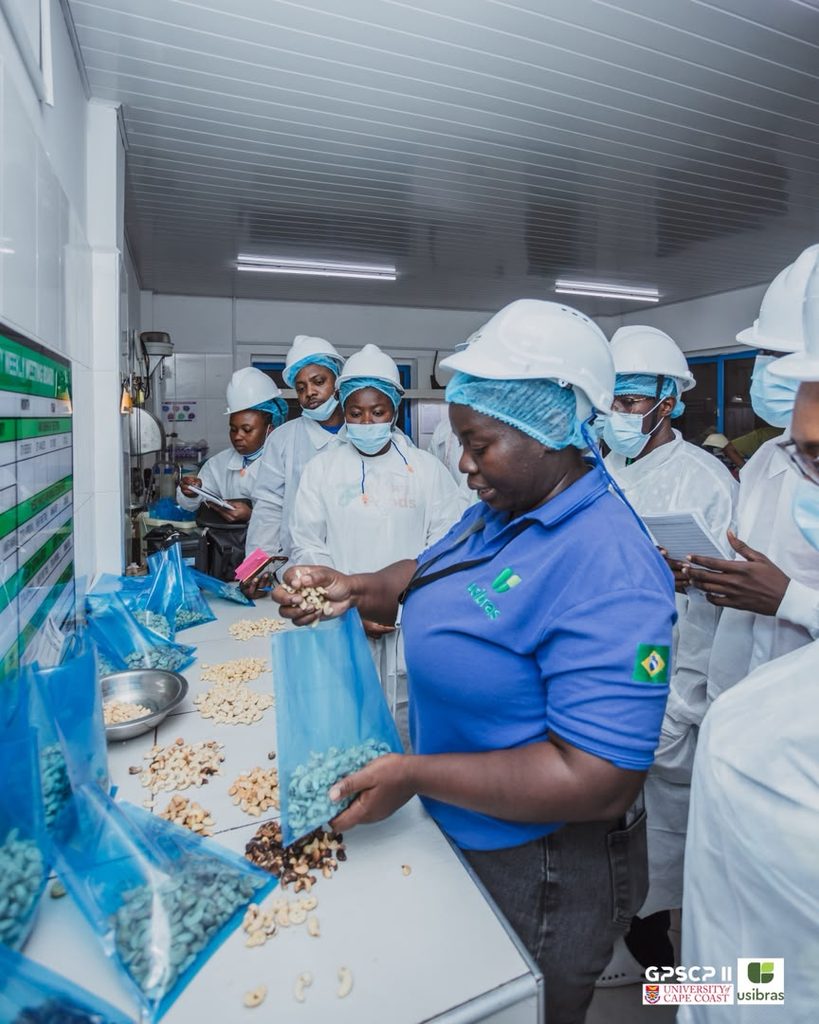
Maintaining quality, reducing losses and producing market-ready cashew kernels
Quality is one of the most important factors in cashew processing. It determines the safety, appearance, consistency and market value of cashew kernels. For every cashew processing factory, maintaining high-quality standards should be a priority at every stage of production.
Effective quality control helps processors identify defects early, reduce product losses, maintain customer confidence and meet the requirements of both local and international markets.
- Understanding Quality Control in Cashew Processing
Quality control involves inspecting, testing and monitoring cashew nuts and kernels throughout the processing chain to ensure that the final product meets the required standards.
It begins with the receipt of raw cashew nuts and continues through steaming or roasting, shelling, drying, peeling, grading, packaging and storage.
Processors should establish clear quality control procedures and ensure that all employees understand their responsibilities in maintaining product quality.
Some important practices include:
- Inspecting incoming raw cashew nuts for visible damage, foreign materials and signs of poor quality.
- Monitoring processing conditions to prevent excessive breakage, discolouration and other defects.
- Maintaining clean equipment, work surfaces and processing areas.
- Conducting regular inspections of finished kernels before packaging.
- Keeping accurate records of quality checks, defects and corrective actions.
Quality control should be a continuous process rather than an activity performed only when the finished product is ready for sale.
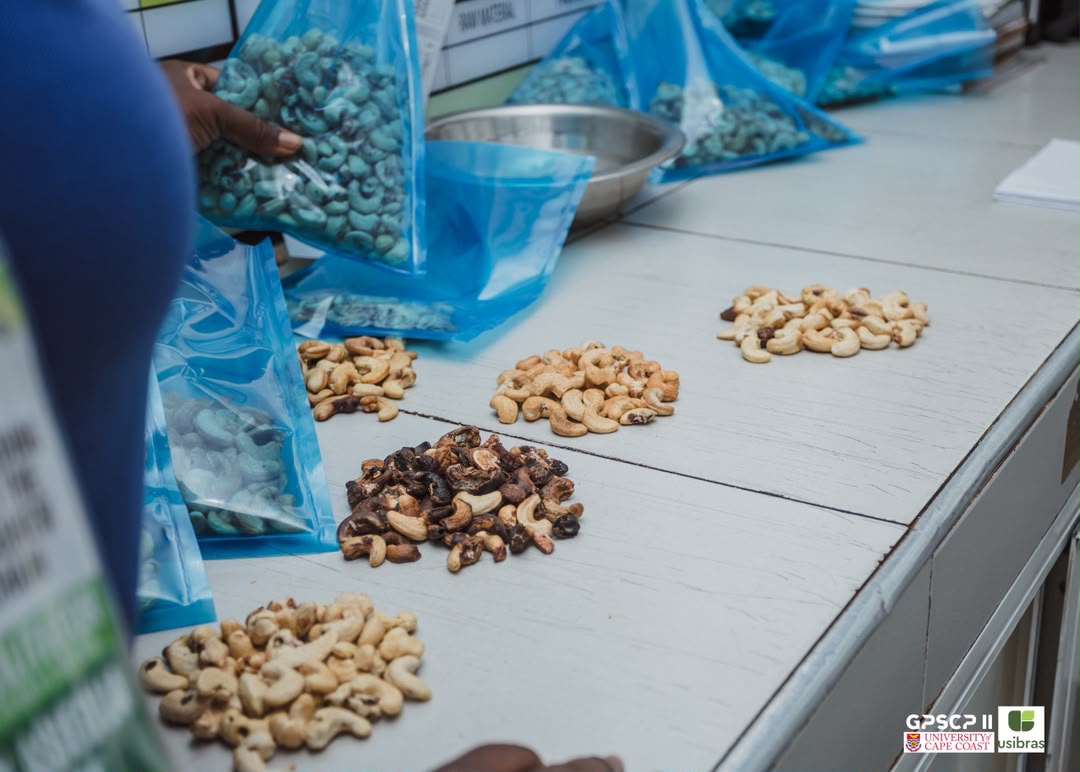
- Kernel Defect Identification
Kernel defects can affect the appearance, grade, safety and market value of cashew kernels. Identifying these defects early enables processors to take corrective action and prevent defective products from reaching customers.
Common kernel defects include:
Broken kernels: Kernels that are split or broken into smaller pieces. Excessive breakage may result from poor handling, unsuitable machine settings or improper processing techniques.
Discoloured kernels: Kernels with abnormal colouring, such as excessive yellowing or darkening. This may result from excessive heat, poor drying or unsuitable storage conditions.
Shrivelled kernels: Kernels with a wrinkled or underdeveloped appearance. These may be associated with raw nut quality or processing conditions.
Insect-damaged kernels: Kernels showing visible insect damage or infestation. Such kernels require careful inspection and appropriate handling.
Mouldy kernels: Kernels showing visible mould growth or signs of fungal deterioration. These should be isolated and managed according to appropriate food safety procedures.
Processors should ensure that quality control personnel can identify defects accurately and understand how each defect affects grading, food safety and customer acceptance.
- Proper Sampling Procedures
Sampling is essential for determining the quality of a batch of cashew kernels. A representative sample provides a more reliable indication of the overall condition of the batch.
Poor sampling practices can lead to inaccurate quality assessments and may result in defective products being accepted or good products being unnecessarily rejected.
To improve sampling accuracy, processors should:
- Identify and record the batch or lot number before sampling.
- Collect samples from different positions within the batch.
- Use clean and suitable sampling equipment.
- Avoid contamination or mixing samples from different batches.
- Label samples clearly and record the date and inspection results.
- Compare the findings with the applicable quality standards or customer specifications.
Where defects are detected, the affected batch should be investigated to determine whether further inspection, sorting, reprocessing or rejection is necessary.
- Kernel Grading and Classification
Kernel grading involves classifying cashew kernels according to established quality characteristics such as size, colour, condition and the proportion of whole or broken kernels.
Proper grading helps processors maintain consistency, meet customer requirements and obtain appropriate market value for their products.
Processors should ensure that:
- Grading is conducted according to the relevant market or customer specifications.
- Whole kernels and broken kernels are separated appropriately.
- Kernels with unacceptable defects are identified and handled correctly.
- Grading equipment is maintained and used properly.
- Employees responsible for grading are adequately trained.
Consistent grading practices help prevent disputes with buyers and improve confidence in the quality of products supplied.
- Moisture Content and Proper Storage
Moisture content is a critical factor in maintaining cashew kernel quality. Excessive moisture can encourage mould growth and deterioration, while unsuitable storage conditions can cause kernels to absorb moisture and lose quality.
Processors should use a calibrated moisture meter or an approved testing method to determine whether kernels meet the required moisture limits.
Good moisture management practices include:
- Ensuring that kernels are adequately dried before packaging.
- Checking moisture content regularly and recording the results.
- Following the moisture limits specified by the applicable product standard or customer requirement.
- Storing finished kernels in clean, dry and well-ventilated conditions.
- Protecting packaged kernels from moisture, pests and other sources of contamination.
Visual inspection alone is not sufficient to determine whether kernels are adequately dried. Regular moisture testing is necessary to support effective quality control.
- Making Quality Control a Daily Factory Practice
Maintaining quality requires the commitment of factory management, production teams and quality control personnel.
Every cashew processing factory should establish a routine quality control checklist that covers:
- Inspection of incoming raw materials.
- Monitoring of processing operations.
- Identification and recording of kernel defects.
- Sampling and grading of finished kernels.
- Moisture content checks.
- Inspection of packaging and storage conditions.
Quality issues should be documented, investigated and addressed promptly. Regular staff training and supervision can also help prevent recurring defects and improve production efficiency.
Conclusion
Quality control is a shared responsibility across every cashew processing factory. By applying effective inspection procedures, identifying kernel defects accurately, conducting proper sampling, maintaining consistent grading practices and managing moisture content, processors can improve product quality, reduce losses and strengthen their competitiveness.
Every processor has a role to play in ensuring that Ghanaian cashew kernels meet the expectations of customers and the standards of the markets they serve.
Quality is not achieved by inspection alone. It is built into every stage of the processing operation.